
Ketamine for Anxiety, PTSD & OCD · Chandler, AZ

Ketamine for Anxiety, PTSD & OCD

Ketamine for anxiety, PTSD, and OCD is being studied as an option for patients whose symptoms haven't responded well to standard medication or therapy. Advanced Ketamine provides medically supervised ketamine infusion therapy from our Chandler clinic for treatment-resistant anxiety, PTSD, and OCD. It's one option worth understanding if you're researching anxiety or PTSD treatment in Arizona and conventional approaches haven't been enough.

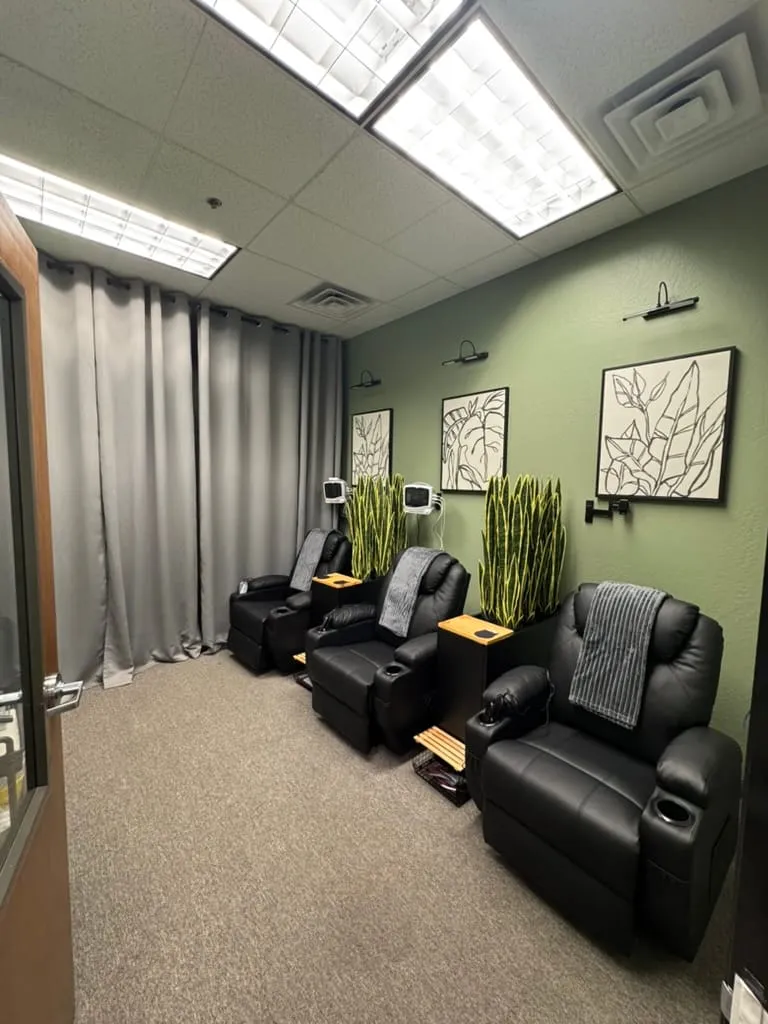
A calm treatment room at Advanced Ketamine with reclining chairs, soft curtains, plants, and botanical art
Medically supervisedContinuous RN monitoringServing the greater Phoenix areaInside Advanced Medical Wellness
01 · How It Works

How ketamine works for anxiety, PTSD & OCD

Anxiety, PTSD, and OCD are distinct conditions, but they share some overlapping neurobiology: all three are associated with disrupted glutamate signaling in brain circuits connecting the amygdala (the brain's threat-detection center) with the prefrontal cortex (involved in regulating fear and compulsive responses). In some cases, ongoing symptoms can damage neuronal connections in the brain, including pathways involving the hippocampus. This circuitry is also central to fear extinction, the brain's ability to "unlearn" a fear response over time, which is part of what conditions like PTSD and OCD can disrupt.

Ketamine acts as an NMDA receptor antagonist and modulates glutamate transmission in these circuits. That's why it's being explored not only for anxiety symptoms themselves, but also in related conditions such as treatment-resistant depression, where neuroplasticity may help support relearning alongside therapies like exposure therapy. This is part of why some researchers have studied ketamine as a way to potentially enhance the effects of exposure-based therapies, rather than only as a standalone treatment.

For the general step-by-step of what an infusion visit looks like, see our Ketamine Infusion Therapy page.

02 · Conditions

Anxiety, PTSD & OCD we treat

Post-Traumatic Stress Disorder (PTSD)

PTSD involves persistent, intrusive symptoms following a traumatic event, including flashbacks, hypervigilance, avoidance, and mood disturbances, that continue well beyond the event itself. Ketamine has been studied specifically for chronic PTSD that hasn't adequately responded to first-line treatments like trauma-focused therapy or SSRIs, with research showing it can produce a rapid, though sometimes short-lived, reduction in PTSD symptom severity. It has also been studied for suicidal ideation, with one analysis reporting 78 percent of suicidal patients improving after ketamine treatment.

Obsessive-Compulsive Disorder (OCD)

OCD involves intrusive, distressing thoughts (obsessions) and repetitive behaviors performed to reduce that distress (compulsions). Standard first-line treatments are SSRIs and exposure and response prevention (ERP) therapy, but a meaningful share of patients don't achieve adequate relief from either. Ketamine has shown promise in early controlled research as a way to produce rapid, if often temporary, reductions in obsessional symptoms, an area of particularly active ongoing research.

Generalized & Social Anxiety Disorder

Generalized anxiety disorder (GAD) involves persistent, excessive worry across many areas of life, while social anxiety disorder (SAD) centers on intense fear of social or performance situations. Both are typically treated first with SSRIs/SNRIs and therapy. Ketamine has been studied specifically in patients with treatment-refractory GAD and SAD, with social anxiety showing some of the more consistent positive signal in controlled research to date.

Trauma-Related Symptoms, Major Depressive Disorder & Mood Disorders

Anxiety, PTSD, and OCD frequently co-occur with depression or other trauma-related symptoms, including major depression, and ketamine has shown significant benefit in some studies, with over 70 percent of patients seeing meaningful depression reduction. Your treatment plan is built around your full clinical picture rather than a single diagnosis in isolation.

Depression frequently co-occurs with these conditions. See our Ketamine for Depression page.

03 · Treatment Options

Anxiety and PTSD treatment in Arizona: where ketamine fits in

If you're researching anxiety treatment or PTSD treatment options in Arizona, ketamine infusion therapy is generally considered alongside, not instead of, other established approaches:

  • SSRIs/SNRIs: Still the typical first-line medication approach for anxiety, PTSD, and OCD, though full effect can take four to eight weeks and a meaningful share of patients don't achieve adequate relief.
  • Exposure and Response Prevention (ERP): The gold-standard therapy specifically for OCD, focused on gradually reducing compulsive responses to obsessive triggers.
  • Trauma-focused therapies (CBT, EMDR, prolonged exposure): First-line, evidence-based therapy approaches specifically for PTSD.
  • Benzodiazepines: Sometimes used for short-term anxiety relief, but generally avoided for long-term use due to dependence risk. Ketamine is not a benzodiazepine and works through an entirely different mechanism.
  • Ketamine infusion therapy: Generally considered when standard medication and therapy haven't produced adequate relief, particularly for treatment-refractory PTSD, OCD, and social anxiety, and sometimes explored as a way to support therapy rather than replace it. Potential benefits vary by patient, some patients may be advised to have maintenance infusions after an initial series, and off-label ketamine therapy is not universally covered by insurance.

Ketamine isn't necessarily a substitute for trauma-focused therapy or ERP. Many patients continue that work alongside infusion treatment, and some providers specifically consider ketamine as a way to make that therapeutic work more effective. The right fit depends on your diagnosis and history, which is what a consultation is for.

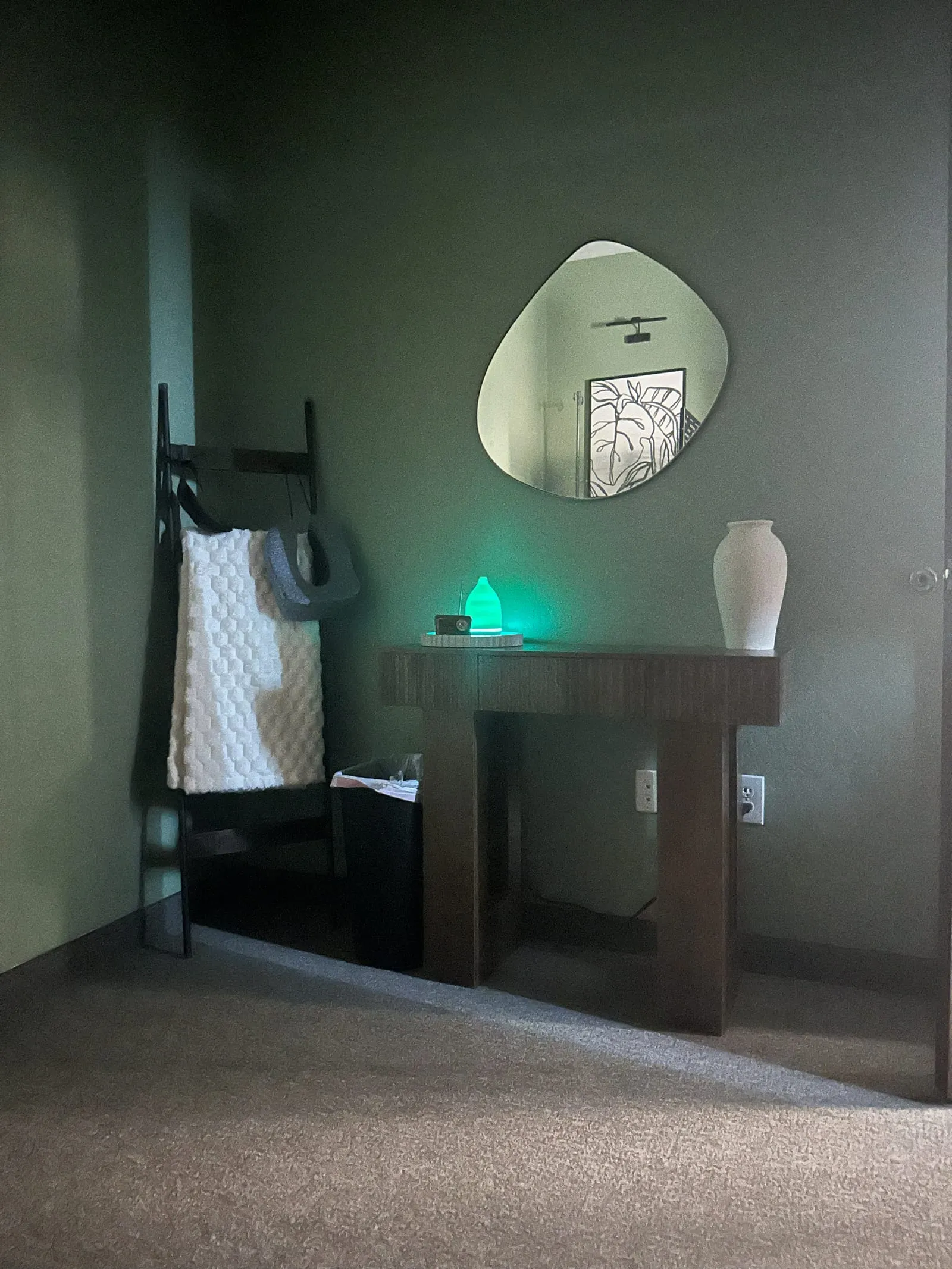
Privacy screens between reclining infusion chairs at Advanced KetamineA quiet corner of the treatment suite with a mirror, diffuser, and soft lighting
04 · Treatment for Anxiety, PTSD & OCD

What ketamine treatment for anxiety, PTSD & OCD looks like

The general infusion process is consistent across conditions (see our Ketamine Infusion Therapy page for the full step-by-step), with a few condition-specific elements for anxiety, PTSD, and OCD:

Condition-specific symptom tracking

Your provider typically uses a validated rating scale matched to your diagnosis, such as the GAD-7 for generalized anxiety, the PCL-5 for PTSD, the Y-BOCS for OCD, or the LSAS for social anxiety, to track your progress objectively over time. Candidacy may also include reviewing your current medications and, when indicated, lab tests to assess liver and kidney function.

Trauma-informed approach for PTSD

Given the dissociative nature of ketamine, your provider takes extra care with PTSD patients to create a calm, controlled environment, set an appropriate dose, and discuss what to expect beforehand, including common immediate side effects like dizziness, nausea, and dissociation. Some patients may begin with a trial session to gauge their reaction before a broader treatment plan is set.

Coordination with your therapist

If you're already in exposure therapy, ERP, or trauma-focused therapy, we coordinate with your existing treatment rather than working in isolation. For some patients with severe symptoms, timing infusions around therapy sessions may be discussed as part of your plan.

Initial series and maintenance

As with other conditions, most patients begin with a short series of infusions, with your provider determining afterward whether maintenance treatment makes sense based on your response and early symptom relief.

05 · Safety & Candidacy

Safety considerations for anxiety, PTSD & OCD patients

Beyond the general candidacy criteria that apply to all patients, a few considerations come up more specifically for anxiety, PTSD, and OCD. Published evidence from clinical research studies has reported benefits within one hour of infusion, including after a single ketamine infusion in some protocols. Some treatment series also report over 70% of patients seeing significant symptom reduction after three infusions, though outcomes vary by diagnosis and study design and continue to be refined in ongoing research:

  • Comfort with the dissociative experience: Ketamine's dissociative effects can feel unfamiliar or unsettling for some anxious patients. Your provider will talk through what to expect in detail beforehand, and the treatment room is kept calm and low-stimulation throughout.
  • Trauma history considerations: For PTSD patients specifically, your provider factors in your trauma history and current symptom severity when building your protocol, since a controlled, well-prepared setting matters even more when dissociation is part of the experience.
  • Not a replacement for crisis care: Ketamine infusion therapy is an appointment-based treatment, not an emergency intervention. If you're in crisis, please call or text 988 (Suicide & Crisis Lifeline) or go to your nearest emergency room.
  • Coordination with therapy: If you're actively doing ERP or trauma-focused therapy, we discuss timing and coordination with your therapist so treatments complement each other rather than working at cross purposes.
06 · Evidence

Backed by research specific to anxiety, PTSD & OCD

Research on ketamine for anxiety spectrum disorders is younger and smaller in scale than the depression literature, which is worth knowing going in. A sample of the condition-specific research:

Randomized Controlled Crossover Trial of Ketamine in Obsessive-Compulsive Disorder: Proof-of-Concept

Neuropsychopharmacology, 2013 (Rodriguez et al.)

A randomized, placebo-controlled crossover trial finding that a single IV ketamine infusion produced a significantly higher response rate than placebo in patients with treatment-resistant OCD. One of the first controlled trials in this area.

View on PubMed →

Efficacy of Intravenous Ketamine for Treatment of Chronic Posttraumatic Stress Disorder: A Randomized Clinical Trial

JAMA Psychiatry, 2014 (Feder et al.)

A randomized, controlled trial finding that a single ketamine infusion produced a significant, rapid reduction in PTSD symptom severity compared to an active control, in patients with chronic PTSD.

View on PubMed →

Ketamine for Social Anxiety Disorder: A Randomized, Placebo-Controlled Crossover Trial

Neuropsychopharmacology, 2018 (Taylor et al.)

A randomized, placebo-controlled crossover trial in adults with social anxiety disorder finding that ketamine produced significantly greater improvement in social anxiety symptoms than placebo.

View on PubMed →

Systematic Review and Meta-Analysis of Randomized Controlled Trials of Ketamine in the Treatment of Refractory Anxiety Spectrum Disorders

Therapeutic Advances in Psychopharmacology, 2021 (Whittaker et al.)

A meta-analysis of six controlled trials spanning social anxiety, PTSD, and OCD, finding a strong, statistically significant treatment response for social anxiety disorder, with a positive but not statistically significant pooled effect for PTSD. An honest picture of where the evidence is stronger and where it is still developing.

View on PubMed →

This is a sample of the published clinical literature on ketamine for anxiety, PTSD, and OCD and is provided for informational purposes. It is not medical advice. As the research above shows, evidence strength varies by condition, and individual results vary. Schedule a consultation with our provider to discuss whether treatment may be right for you.

07 · Service Area

Anxiety, PTSD & OCD treatment for the greater Phoenix area

Advanced Ketamine is based in Chandler, Arizona, inside Advanced Medical Wellness. Patients regularly travel to us for anxiety, PTSD, and OCD treatment from Mesa, Gilbert, Tempe, Queen Creek, Scottsdale, Surprise, and throughout the greater Phoenix metro area.

FAQ

Ketamine for anxiety, PTSD & OCD, frequently asked questions

Is ketamine used differently for anxiety, PTSD, and OCD than it is for depression?

The underlying mechanism (NMDA receptor modulation) is the same, but the clinical target differs. For anxiety, PTSD, and OCD, ketamine's effect on fear-extinction circuitry between the amygdala and prefrontal cortex is often the specific focus, sometimes in combination with therapy. Your provider builds a protocol around your specific diagnosis.

Will ketamine bring up traumatic memories during a PTSD-focused infusion?

Every patient's experience is different. Because ketamine is dissociative, some PTSD patients do process emotional or trauma-related material during a session, which is part of why our providers take extra care to prepare PTSD patients beforehand and keep the treatment room calm and controlled throughout.

How does ketamine help with OCD if it isn't an SSRI or a therapy like ERP?

Ketamine works through a completely different mechanism than SSRIs, targeting glutamate and NMDA receptor activity rather than serotonin. Some researchers believe this may help support the same fear-extinction learning that ERP relies on, which is part of why it's being studied both as a standalone option and as a potential complement to therapy.

I'm anxious about feeling out of control. Will the dissociative effects of ketamine make my anxiety worse during the infusion?

This is a common concern, and it is discussed directly at your consultation. The treatment room is kept calm and low-stimulation, a nurse is present throughout, and your provider will walk you through exactly what to expect beforehand so there are no surprises during the session. Sessions typically last two to three hours, and you may feel groggy for about 30 minutes after treatment.

Can ketamine infusion therapy be combined with exposure therapy (ERP) or trauma-focused therapy like EMDR?

Yes, for many patients. Some providers specifically consider timing ketamine infusions around therapy sessions, based on research suggesting ketamine may help support the neuroplasticity involved in fear-extinction learning. This is discussed individually with your provider and, where relevant, your therapist.

How is "treatment-resistant" defined for anxiety, PTSD, or OCD?

Definitions vary by condition, but it generally means inadequate improvement despite an appropriate trial of first-line treatment: SSRIs/SNRIs and, where applicable, evidence-based therapy like ERP or trauma-focused therapy. Your provider reviews your specific treatment history at consultation.

Does ketamine help with generalized anxiety disorder, or is the evidence mainly for social anxiety?

Both have been studied, but the controlled research base is currently stronger and more consistent for social anxiety disorder than for generalized anxiety disorder. Your provider can walk you through what the evidence does and doesn't currently show for your specific diagnosis.

Can ketamine help with panic attacks specifically?

Ketamine hasn't been as extensively studied for panic disorder specifically as it has for social anxiety, PTSD, and OCD. If panic attacks are a primary concern, this is worth discussing directly with our provider to determine whether infusion therapy is an appropriate fit for your situation.

Is ketamine infusion therapy appropriate for adolescents or young adults with anxiety, PTSD, or OCD?

Ketamine infusion therapy for these conditions is generally offered to adults. If you're asking on behalf of a minor, discuss this directly with our provider, who can advise on appropriate options.

If I have both anxiety and trauma-related symptoms, how do you decide what to focus treatment on?

Your provider looks at your full clinical picture, not just a single diagnosis, when building your protocol, and will talk through with you which symptoms are prioritized and why as part of your personalized treatment plan.

Compare us. Then talk to us.

Candidacy is determined at a consultation: your history, your questions, and a clear recommendation. If we are not the right fit, we will say so.

Our patient coordinator will reach out within 24 hours. The phone consultation is free; a $149 medical evaluation ($99 for first responders) is required before starting treatment.